
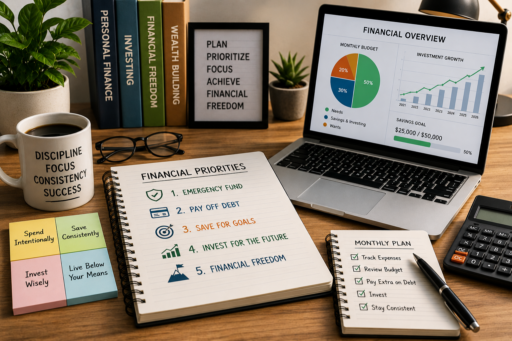
Managing money is not only about earning more or spending less. One of the most important financial skills is knowing which goals deserve your attention first. Without clear priorities, it is easy to feel overwhelmed by competing financial responsibilities such as paying bills, reducing debt, building savings, investing, and planning for the future.
Learning how to manage financial priorities effectively helps you make confident decisions without feeling that every financial goal must be accomplished at the same time. Instead of spreading your resources too thin, you can focus on the actions that create the greatest long-term impact.
Financial priorities naturally change throughout life. A recent graduate may focus on paying student loans and building an emergency fund, while a growing family may prioritize home ownership, insurance, or retirement planning. Regardless of your stage of life, having a clear financial plan helps ensure your money supports what matters most.
In this guide, you’ll discover practical strategies for organizing financial goals, making smarter decisions, and building lasting financial stability.
Understand Your Current Financial Situation
Before setting priorities, take a complete look at your finances.
Review your:
- Monthly income.
- Essential expenses.
- Savings.
- Investments.
- Debt balances.
- Financial obligations.
Having an accurate picture of your finances makes it much easier to decide where your money should go first.
Learning how to manage financial priorities effectively always begins with understanding your current position.
Separate Immediate Needs From Long-Term Goals
Not every financial goal requires immediate attention.
Divide your priorities into two groups.
Immediate priorities
- Housing.
- Utilities.
- Food.
- Transportation.
- Insurance.
- Minimum debt payments.
Long-term priorities
- Emergency savings.
- Investing.
- Retirement planning.
- Buying a home.
- Financial independence.
This simple distinction helps you balance today’s responsibilities with tomorrow’s opportunities.
Build an Emergency Fund First
Unexpected expenses can disrupt even the best financial plan.
An emergency fund protects you against:
- Medical bills.
- Job loss.
- Vehicle repairs.
- Home maintenance.
- Unexpected travel.
Without emergency savings, many people rely on expensive debt during financial emergencies.
Building this safety net should remain one of your highest priorities.
Eliminate High-Interest Debt
After covering essential needs and beginning your emergency fund, reducing high-interest debt usually becomes the next priority.
Paying off expensive debt:
- Improves monthly cash flow.
- Reduces financial stress.
- Frees money for saving.
- Creates more investing opportunities.
Every dollar no longer spent on interest helps strengthen your financial future.
Create Clear Financial Goals
Specific goals make prioritization much easier.
Examples include:
- Save $10,000 for emergencies.
- Eliminate credit card debt.
- Invest 15% of monthly income.
- Buy a home within five years.
- Reach financial independence.
When you understand how to manage financial priorities effectively, your financial goals become much easier to organize. Clear objectives help you allocate your income wisely, stay focused on what matters most, and measure your progress with greater confidence over time.
Give Every Dollar a Purpose
One of the simplest budgeting strategies is assigning every dollar a specific job.
Your income may be allocated toward:
- Living expenses.
- Savings.
- Investments.
- Debt repayment.
- Personal spending.
- Entertainment.
Planning your money before spending it reduces financial uncertainty while improving discipline.
Avoid Trying to Do Everything at Once
Many people become discouraged because they try to achieve every financial goal simultaneously.
Instead:
- Focus on your highest priority.
- Build consistent progress.
- Celebrate milestones.
- Move to the next objective.
Steady progress usually produces better long-term results than dividing your attention across too many goals.
Review Priorities Regularly
Financial priorities change over time.
Marriage, children, career changes, or unexpected life events may require adjusting your financial plan.
Review your priorities every few months to ensure they still reflect your current needs.
Flexibility is an important part of successful financial planning.
Align Spending With Your Priorities
Every purchase either supports or delays your financial goals.
Before making non-essential purchases, ask yourself:
- Does this expense match my priorities?
- Could this money move me closer to an important goal?
- Am I spending intentionally?
Thoughtful spending creates more opportunities to achieve meaningful financial objectives.
Learn to Delay Gratification
One of the strongest financial habits is delaying immediate rewards.
Choosing to save or invest instead of making unnecessary purchases often produces much greater long-term benefits.
Patience allows your financial priorities to remain stronger than temporary impulses.
Many readers strengthen this discipline by applying the ideas from How to Create Better Spending Habits, helping everyday financial decisions align with long-term goals.
Build Financial Confidence Gradually
Confidence grows through action.
Each positive decision—whether paying off debt, increasing savings, or investing consistently—strengthens your ability to manage future financial challenges.
Small achievements build momentum that supports larger financial goals over time.
Many financially successful individuals also reinforce these habits through Best Ways to Build Financial Independence, creating a long-term strategy based on consistent progress instead of short-term results.
Protect Your Most Important Financial Goals
Some financial goals have a greater impact on your long-term stability than others.
Protect priorities such as:
- Emergency savings.
- Retirement contributions.
- Insurance coverage.
- Essential debt payments.
Whenever possible, treat these commitments as non-negotiable parts of your monthly budget.
Learning how to manage financial priorities effectively becomes much easier when your most important goals receive attention before discretionary spending.
Prepare for Future Expenses
Not every expense is unexpected.
Many predictable costs occur every year, including:
- Insurance renewals.
- Vehicle maintenance.
- School expenses.
- Holiday spending.
- Property taxes.
Planning for these expenses in advance reduces financial stress while preventing unnecessary debt.
Increase Your Income When Possible
Managing priorities is not only about reducing expenses.
Increasing your income may allow you to:
- Save more.
- Invest consistently.
- Pay off debt faster.
- Reach financial goals sooner.
Consider opportunities such as:
- Professional development.
- Freelancing.
- Online businesses.
- Part-time work.
- Passive income investments.
A balanced approach combines thoughtful spending with steady income growth.
Communicate Financial Priorities With Your Family
If you share financial responsibilities with a partner or family, discuss priorities regularly.
Topics may include:
- Saving goals.
- Debt repayment.
- Monthly budgets.
- Major purchases.
- Long-term financial plans.
Open communication helps everyone work toward the same financial objectives while reducing misunderstandings.
Learn to Say No to Low-Priority Spending
Every dollar spent on low-priority purchases is unavailable for higher-priority goals.
Before making discretionary purchases, ask yourself:
- Will this expense improve my life?
- Is this more important than my financial goals?
- Can this purchase wait?
Small decisions like these help protect your long-term financial progress.
Review Your Progress Each Month
A monthly financial review helps ensure your priorities remain on track.
Review:
- Income.
- Spending.
- Savings.
- Investments.
- Debt reduction.
- Progress toward financial goals.
Learning how to manage financial priorities effectively is an ongoing process. Regular monthly reviews help you identify small issues early, allowing you to adjust your budget and financial plan before minor challenges develop into significant financial setbacks.
Avoid Comparing Your Financial Journey
Every person’s financial situation is unique.
Income, family responsibilities, career paths, and financial goals differ significantly.
Instead of comparing yourself to others, measure your progress against your own priorities.
Consistent personal improvement creates greater satisfaction than competing with someone else’s timeline.
Common Financial Priority Mistakes
Many people unintentionally delay financial progress by making avoidable mistakes.
Common examples include:
- Ignoring emergency savings.
- Spending before saving.
- Chasing too many goals at once.
- Never reviewing financial plans.
- Allowing lifestyle inflation.
- Delaying investing unnecessarily.
Recognizing these habits helps you focus on the priorities that matter most.
Continue Improving Your Financial Decision-Making
Financial priorities naturally evolve as life changes.
Continue improving your decision-making by:
- Reviewing financial goals regularly.
- Learning about personal finance.
- Increasing savings when possible.
- Investing consistently.
- Adjusting priorities when necessary.
Small improvements in decision-making often create significant long-term financial benefits.
Many readers continue strengthening these habits alongside Best Financial Decisions for Long-Term Stability, reinforcing practical financial strategies that support lasting financial security.
Focus on Steady Progress
Financial success rarely comes from making one perfect decision.
Instead, it develops through hundreds of thoughtful choices made consistently over many years.
Every dollar saved, every debt payment made, and every investment contribution moves you closer to greater financial confidence.
Steady progress always beats short-term perfection.
Final Thoughts
Learning how to manage financial priorities effectively helps you focus your time, energy, and money on the goals that create the greatest long-term impact. By understanding your financial situation, protecting your highest priorities, planning ahead, and reviewing your progress regularly, you can make confident financial decisions that support lasting stability.
Remember that financial priorities will naturally change throughout your life. The key is remaining flexible while continuing to make intentional decisions that reflect your values and long-term objectives. Every thoughtful choice strengthens your financial foundation and prepares you for future opportunities.
Whether you are paying off debt, building savings, investing for retirement, or working toward financial independence, clear priorities help transform complex financial decisions into manageable daily actions.
Many individuals also strengthen these habits by combining them with How to Build Financial Literacy From Scratch and Best Ways to Develop a Wealth Mindset, creating a balanced financial strategy centered on discipline, planning, and sustainable financial growth.
For additional educational guidance on budgeting, financial planning, and managing money effectively, you can naturally link to Consumer Financial Protection Bureau using the anchor text personal finance planning resources in the section discussing continuous financial improvement.