
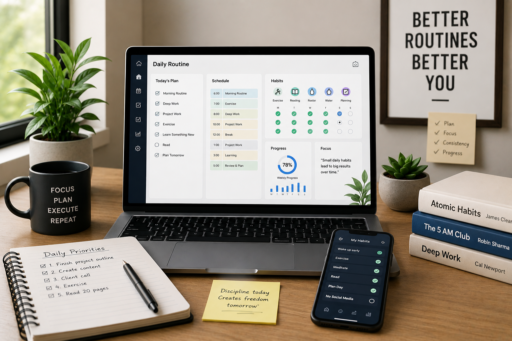
Your daily routine has a greater impact on your long-term success than occasional bursts of motivation. One of the most effective ways to improve your life is learning how to build better daily routines. While motivation naturally rises and falls, routines provide structure that keeps you moving forward even on days when you don’t feel particularly productive. Small actions repeated consistently often lead to remarkable improvements over time.
Learning how to build better daily routines is not about creating a rigid schedule that controls every minute of your day. Instead, it’s about designing habits that support your goals, improve your well-being, and make important tasks easier to accomplish without relying on constant willpower.
Many successful professionals, entrepreneurs, and high achievers share one common characteristic—they follow consistent daily routines. Their habits reduce decision fatigue, improve focus, and create momentum that carries throughout the day.
In this guide, you’ll discover practical strategies for building routines that improve productivity, reduce stress, and help you achieve meaningful progress while maintaining a healthy work-life balance.
Why Daily Routines Matter
Without routines, every day begins with dozens of decisions.
What should you work on first?
When should you answer emails?
Should you exercise today?
Which project deserves your attention?
Making these decisions repeatedly consumes valuable mental energy.
Strong routines help you:
- Reduce decision fatigue.
- Improve consistency.
- Increase productivity.
- Build healthier habits.
- Stay organized.
- Reduce stress.
- Maintain long-term progress.
Instead of deciding what to do every morning, your routine automatically guides your actions.
Start With Small Habits
One of the biggest mistakes people make is trying to change everything at once.
Rather than creating an ambitious routine filled with dozens of new habits, begin with one or two simple improvements.
Examples include:
- Drinking water after waking up.
- Planning your day.
- Reading for ten minutes.
- Taking a short morning walk.
- Writing tomorrow’s priorities each evening.
Small habits are easier to maintain and gradually become part of your lifestyle.
Learning how to build better daily routines begins with consistency rather than intensity.
Build a Consistent Morning Routine
Your morning often sets the tone for the rest of the day.
A productive morning routine may include:
- Waking up at the same time.
- Drinking water.
- Stretching or exercising.
- Reviewing priorities.
- Planning your schedule.
- Beginning your most important task.
Starting your day intentionally improves focus while reducing unnecessary distractions.
Prioritize Your Most Important Work
Instead of immediately checking emails or social media, identify the one task that creates the greatest value.
Completing meaningful work early creates momentum while reducing stress later in the day.
Ask yourself:
- What task matters most today?
- Which activity moves my goals forward?
- What requires my highest level of concentration?
Protect your best energy for your most important work.
Create Healthy Evening Habits
Evening routines are just as important as morning routines.
Helpful evening habits include:
- Reviewing completed work.
- Preparing tomorrow’s priorities.
- Cleaning your workspace.
- Reading.
- Limiting screen time.
- Going to bed consistently.
Ending your day with intention helps you begin the next day with greater clarity.
Make Your Routine Realistic
Many routines fail because they are impossible to maintain.
Avoid creating schedules that require perfection.
Instead:
- Leave room for flexibility.
- Expect occasional interruptions.
- Focus on progress instead of perfection.
Realistic routines are much easier to follow over the long term.
Protect Time for Personal Growth
Daily routines should include more than work.
Reserve time for:
- Reading
- Learning
- Exercise
- Family
- Hobbies
- Relaxation
Personal growth improves both your professional performance and your overall quality of life. Investing in continuous learning is an important part of how to build better daily routines, helping you develop skills, stay motivated, and make steady progress toward your long-term goals.
Eliminate Unnecessary Decisions
Highly productive people simplify routine decisions whenever possible.
Examples include:
- Planning meals.
- Preparing clothes.
- Scheduling workouts.
- Organizing tomorrow’s calendar.
- Creating recurring task lists.
Reducing small decisions saves mental energy for more important responsibilities.
Review Your Routine Weekly
Your routine should evolve as your responsibilities change.
Each week, ask yourself:
- Which habits are helping?
- Which activities waste time?
- What feels difficult to maintain?
- What could be simplified?
Regular reviews keep your routine effective without becoming overly complicated.
Many professionals improve these habits alongside Best Time Management Techniques That Work, allowing their schedules and routines to support one another more effectively.
Remove Bad Habits Gradually
Building better routines isn’t only about adding good habits.
It’s also about reducing behaviors that limit productivity.
Examples include:
- Excessive social media.
- Constant phone checking.
- Skipping meals.
- Staying up too late.
- Working without breaks.
Replacing one negative habit at a time creates lasting improvements.
Build Habits Around Existing Habits
One effective strategy is habit stacking.
For example:
- After brushing your teeth, review your daily goals.
- After drinking coffee, plan your schedule.
- After lunch, review project progress.
- Before bed, prepare tomorrow’s priorities.
Connecting new habits to existing routines makes them easier to remember and maintain.
Many professionals combine this strategy with Best Productivity Systems for Busy Professionals to create structured routines that improve focus, consistency, and long-term productivity.
Stay Flexible
No routine works perfectly every day.
Unexpected meetings, family responsibilities, travel, and emergencies will occasionally disrupt your schedule.
Rather than abandoning your routine completely, simply return to it as soon as possible.
Consistency over months matters far more than perfection on any single day.
Many people also strengthen their routines with Best AI Tools for Daily Productivity, using automation and smart planning to stay organized even during busy periods.
Track Your Progress
One of the best ways to stay committed to a routine is by measuring your progress.
Tracking habits allows you to see how consistently you’re following your routine and identify areas that need improvement.
You might track:
- Wake-up time
- Exercise sessions
- Reading habits
- Water intake
- Deep work sessions
- Daily planning
- Sleep schedule
Seeing steady progress builds motivation and reinforces positive behavior.
Learning how to build better daily routines becomes much easier when you can clearly see your improvements over time.
Create an Environment That Supports Your Habits
Your surroundings have a significant influence on your daily behavior.
A well-organized environment makes good habits easier and unhealthy habits more difficult.
Simple examples include:
- Keeping your workspace clean.
- Placing books where you’ll see them.
- Preparing exercise equipment in advance.
- Keeping healthy snacks nearby.
- Turning off unnecessary notifications.
Small environmental changes often lead to surprisingly large improvements in consistency.
Avoid Trying to Change Everything at Once
Many people become excited about improving their lives and immediately attempt to build an entirely new lifestyle.
Unfortunately, this often leads to frustration.
Instead:
- Add one new habit.
- Practice it consistently.
- Allow it to become automatic.
- Introduce the next improvement.
Gradual progress is far more sustainable than dramatic overnight change.
Protect Your Sleep Routine
A productive day usually begins the night before.
Maintaining a consistent sleep schedule improves:
- Focus
- Energy
- Mood
- Decision-making
- Memory
- Productivity
Going to bed and waking up at similar times each day supports nearly every other healthy habit.
Build Routines Around Your Energy Levels
Everyone experiences natural fluctuations in energy throughout the day.
Pay attention to when you feel:
- Most focused
- Most creative
- Most energetic
- Most analytical
Schedule your most demanding work during these periods.
Lower-energy hours can be reserved for emails, meetings, or routine administrative work. Organizing your schedule this way is a practical example of how to build better daily routines, allowing you to match your energy levels with the tasks that matter most and improve overall productivity.
Don’t Let One Bad Day End Your Progress
Missing one workout, skipping one reading session, or having an unproductive afternoon does not erase your progress.
The biggest mistake is allowing one setback to become a permanent habit.
Instead:
- Accept the interruption.
- Learn from it.
- Return to your routine the next day.
Long-term consistency always matters more than short-term perfection.
Celebrate Small Wins
Recognizing progress makes routines more enjoyable.
Celebrate milestones such as:
- Completing a week of consistent planning.
- Reading every day for a month.
- Maintaining a regular sleep schedule.
- Exercising consistently.
- Completing important projects.
Small victories reinforce positive behavior and increase motivation.
Common Routine-Building Mistakes
Many people unintentionally make routines more difficult than necessary.
Common mistakes include:
- Creating unrealistic schedules.
- Ignoring personal priorities.
- Trying to build too many habits at once.
- Depending entirely on motivation.
- Never reviewing progress.
- Working without planned breaks.
- Expecting immediate results.
Recognizing these habits makes it easier to create routines that actually last.
Continue Improving Your Routine
Your responsibilities will naturally change throughout different stages of life.
Rather than expecting one routine to work forever, regularly evaluate what needs adjustment.
Ask yourself:
- Which habits save the most time?
- What consistently improves my mood?
- Which routines no longer serve me?
- What small improvement would make tomorrow easier?
Continuous refinement keeps your routines practical and sustainable.
Many professionals strengthen these habits alongside How to Increase Productivity Without Burnout, creating balanced routines that support both productivity and long-term well-being.
Focus on Consistency Instead of Perfection
The most successful routines are not the most complicated.
They are the ones you continue following month after month.
Simple daily habits consistently repeated will almost always outperform ambitious routines that last only a few weeks.
Consistency builds confidence, reduces stress, and creates meaningful long-term results.
Final Thoughts
Learning how to build better daily routines is one of the most valuable investments you can make in your personal and professional life. Well-designed routines reduce decision fatigue, improve productivity, strengthen healthy habits, and help you make steady progress toward your long-term goals.
Start with a few small habits that genuinely support your priorities. As those habits become automatic, gradually expand your routine while maintaining flexibility. Remember that sustainable progress comes from consistency rather than perfection.
Over time, these simple routines will become part of your lifestyle, allowing you to accomplish more with less stress while creating a healthier balance between work, personal growth, and overall well-being.
Many individuals also improve their routines by combining these habits with Best Project Management Tools for Individuals and Best AI Productivity Apps in 2026, creating an integrated productivity system that supports planning, organization, and consistent execution.
For additional guidance on habit formation, healthy routines, and long-term behavior change, you can naturally link to James Clear using the anchor text habit-building resources in the section discussing continuous improvement and consistency.