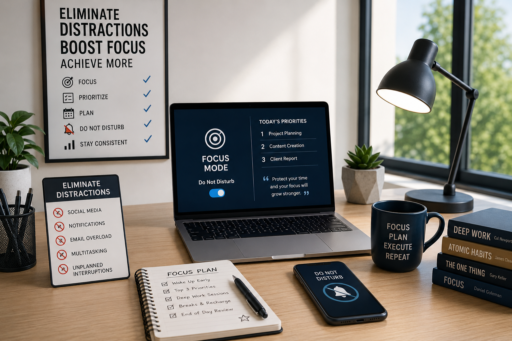
Staying productive has become increasingly difficult in a world filled with constant notifications, endless emails, social media updates, instant messages, and unexpected interruptions. EvenFor many, learning how to eliminate productivity distractions is essential because even highly motivated professionals often lose valuable hours each day becauseas their attention is constantly pulled in different directions.
Learning how to eliminate productivity distractions is one of the most effective ways to improve focus, complete important work faster, and reduce unnecessary stress. While many people search for new productivity apps or complicated planning systems, the real solution often begins with removing the obstacles that interrupt deep, meaningful work.
Distractions do more than waste a few minutes. Every interruption forces your brain to refocus, increasing mental fatigue and making even simple tasks take much longer than expected. By reducing unnecessary distractions and creating an environment that supports concentration, you can dramatically improve both the quality and speed of your work.
In this guide, you’ll discover practical strategies for identifying common distractions, protecting your attention, and building habits that support consistent productivity every day.
Why Distractions Hurt Productivity
Many people underestimate the true cost of interruptions.
Checking one notification may only take a few seconds, but returning to your previous level of concentration often requires several additional minutes.
Over time, dozens of small interruptions can consume hours of productive work each week.
Reducing distractions helps you:
- Improve concentration.
- Complete tasks faster.
- Reduce mental fatigue.
- Produce higher-quality work.
- Feel less overwhelmed.
- Increase long-term productivity.
Protecting your attention is one of the most valuable investments you can make.
Identify Your Biggest Distractions
Before eliminating distractions, identify what interrupts you most often.
Common examples include:
- Social media.
- Phone notifications.
- Email.
- Messaging applications.
- Background noise.
- Unplanned meetings.
- Multitasking.
- Cluttered workspaces.
Spend several days observing where your attention goes.
Understanding your habits makes it much easier to improve them.
Silence Unnecessary Notifications
Every notification competes for your attention.
Consider disabling notifications that are not immediately important.
Examples include:
- Social media alerts.
- Promotional emails.
- Shopping apps.
- News alerts.
- Game notifications.
Checking these applications at scheduled times is often more productive than responding instantly throughout the day.
Learning how to eliminate productivity distractions often begins with taking control of your digital environment.
Create Dedicated Focus Sessions
Instead of working continuously while responding to interruptions, schedule focused work periods.
During these sessions:
- Silence your phone.
- Close unnecessary browser tabs.
- Turn off messaging applications.
- Inform colleagues if needed.
- Focus on one important task.
Even one uninterrupted hour can produce remarkable progress.
Stop Multitasking
Many people believe multitasking improves efficiency.
In reality, constantly switching between tasks increases mistakes while reducing concentration.
Instead:
- Complete one task.
- Take a short break.
- Begin the next priority.
Single-tasking improves both productivity and work quality.
Organize Your Workspace
Your environment influences your ability to concentrate.
A cluttered desk often creates unnecessary mental distractions.
Simple improvements include:
- Removing unnecessary items.
- Organizing documents.
- Keeping essential tools nearby.
- Cleaning your desk daily.
A clean workspace supports clearer thinking and faster decision-making.
Schedule Email Time
Constantly checking email interrupts productive work.
Instead, choose specific times each day for processing messages.
For example:
- Morning
- After lunch
- Late afternoon
Batching email reduces interruptions while keeping communication under control.
Set Clear Priorities
Without clear priorities, every new request feels equally important.
Before beginning work, identify:
- Your highest-priority task.
- Important deadlines.
- Long-term goals.
- Tasks that can wait.
Knowing exactly what deserves your attention makes distractions easier to ignore.
Reduce Browser Distractions
Many professionals spend hours inside their web browser.
Unfortunately, browsers also provide endless opportunities for distraction.
Helpful practices include:
- Closing unused tabs.
- Using bookmarks.
- Logging out of social media during work.
- Blocking distracting websites if necessary.
Small changes often produce surprisingly large improvements.
Work During Your Peak Energy Hours
Everyone experiences periods of higher concentration during the day.
Reserve these hours for:
- Writing.
- Strategic planning.
- Creative work.
- Problem-solving.
- Financial analysis.
Routine administrative work can be completed later when your energy naturally decreases.
Create Daily Planning Habits
Beginning each day with a clear plan reduces uncertainty.
Spend five minutes reviewing:
- Today’s priorities.
- Scheduled meetings.
- Project deadlines.
- Important tasks.
Planning ahead helps you remain focused even when unexpected distractions appear.
Many professionals strengthen this habit by combining it with Best Time Management Techniques That Work, creating structured schedules that make it easier to stay focused throughout the day.
Reduce Decision Fatigue
Every unnecessary decision consumes mental energy.
Simplify routine choices whenever possible.
Examples include:
- Planning meals.
- Preparing tomorrow’s workspace.
- Scheduling recurring tasks.
- Creating morning routines.
Reducing small decisions leaves more energy for meaningful work.
Many individuals also improve their focus by using How to Build Better Daily Routines, allowing productive habits to become automatic instead of relying on constant motivation.
Protect Your Digital Workspace
Digital clutter creates just as many distractions as physical clutter.
Regularly:
- Organize files.
- Delete unnecessary downloads.
- Archive completed projects.
- Update folders.
- Remove duplicate documents.
A well-organized digital environment makes it much easier to stay focused.
Many professionals combine these habits with How to Organize Digital Workflows Efficiently, creating cleaner digital systems that reduce unnecessary interruptions and improve overall productivity.
Learn to Say No to Unnecessary Interruptions
Not every request deserves an immediate response.
Many interruptions appear urgent but can safely wait until you finish your current task.
Whenever possible:
- Decline unnecessary meetings.
- Delay non-essential conversations.
- Respond to messages during scheduled communication times.
- Protect your focused work sessions.
Learning how to eliminate productivity distractions also means protecting your attention from interruptions created by other people.
Use Technology to Improve Focus
Technology can be a distraction, but it can also help you stay focused.
Helpful tools include:
- Focus timers.
- Website blockers.
- Notification managers.
- Calendar reminders.
- Task management applications.
The goal is to make technology support your work instead of constantly competing for your attention.
Take Regular Breaks
Working without breaks eventually reduces concentration.
Short breaks help:
- Restore mental energy.
- Improve creativity.
- Reduce stress.
- Maintain consistent focus.
Even standing up, stretching, or taking a short walk can significantly improve your concentration before returning to work.
Build a Consistent Focus Routine
Your brain performs better when it follows predictable patterns.
A simple routine might include:
Morning:
- Review priorities.
- Complete deep work.
- Avoid checking social media.
Afternoon:
- Process emails.
- Attend meetings.
- Complete administrative tasks.
Evening:
- Review progress.
- Organize tomorrow’s priorities.
- Clean your workspace.
Repeating these habits consistently helps reduce distractions over time.
Avoid Constant Availability
Many professionals feel pressured to respond immediately to every email, message, or phone call.
However, constant availability often destroys productivity.
Instead:
- Set communication hours.
- Use status indicators.
- Explain your availability to colleagues.
- Reserve uninterrupted focus periods.
People quickly adapt when expectations are communicated clearly.
Track Your Attention
Spend a week observing how often you lose focus.
Ask yourself:
- What interrupted me?
- How long did recovery take?
- Could the interruption have been avoided?
- What patterns appear repeatedly?
Tracking distractions helps you eliminate the most frequent problems first.
Build Habits That Protect Your Attention
Strong focus comes from daily habits.
Helpful examples include:
- Beginning work with your highest-priority task.
- Keeping your phone out of reach during deep work.
- Closing unnecessary applications.
- Reviewing your schedule before opening email.
- Organizing your workspace before finishing the day.
These small habits gradually create a distraction-resistant work environment.
Common Productivity Distraction Mistakes
Many people unintentionally create their own distractions.
Examples include:
- Checking notifications every few minutes.
- Keeping dozens of browser tabs open.
- Multitasking continuously.
- Working without priorities.
- Leaving the phone on the desk.
- Never organizing digital files.
- Accepting every meeting invitation.
Recognizing these habits is the first step toward replacing them with healthier routines.
Continue Improving Your Environment
Your workspace should evolve as your responsibilities change.
Regularly ask yourself:
- What distracts me most?
- Which habits improve my concentration?
- What could be simplified?
- Which tools genuinely improve focus?
Small environmental improvements often produce long-term productivity gains.
Many professionals strengthen these habits alongside Best Productivity Systems for Busy Professionals, creating work environments that naturally support deep concentration.
Focus on Progress, Not Perfection
No one remains perfectly focused every minute of every day.
Unexpected interruptions will always occur.
The goal is not eliminating every distraction.
The goal is reducing unnecessary interruptions while quickly returning your attention to meaningful work.
Consistent improvement always produces better results than unrealistic perfection.
Final Thoughts
Learning how to eliminate productivity distractions is one of the most effective ways to improve your daily performance without working longer hours. By identifying your biggest distractions, organizing your workspace, protecting your attention, and building consistent focus habits, you can accomplish more while experiencing less stress and mental fatigue.
Start with one or two simple changes, such as turning off unnecessary notifications or scheduling dedicated focus sessions. As these habits become part of your daily routine, you’ll notice significant improvements in concentration, work quality, and overall productivity.
Remember that attention is one of your most valuable resources. Every distraction you eliminate creates more opportunities to complete meaningful work, make steady progress toward your goals, and maintain a healthier, more balanced approach to productivity.
Many individuals also strengthen their focus by combining these strategies with Best AI Tools for Daily Productivity and Best Note Organization Systems, creating an organized digital environment that supports deep work and efficient task management.
For additional guidance on improving focus, reducing digital distractions, and building healthier technology habits, you can naturally link to Google Digital Wellbeing using the anchor text digital wellbeing resources in the section discussing technology and focus.