
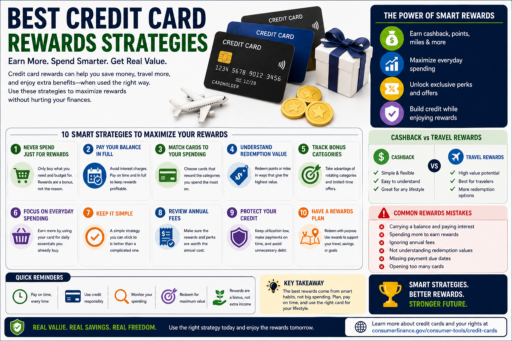
Credit card rewards can be one of the most attractive benefits of using credit cards. Cashback, travel points, airline miles, hotel rewards, and special promotions can provide meaningful value when used correctly. Unfortunately, many consumers focus so heavily on earning rewards that they lose sight of the bigger financial picture.
Imagine earning $100 in rewards while paying hundreds of dollars in interest charges. In that situation, the rewards are not creating value—they are simply offsetting a portion of a larger financial cost.
This is why successful rewards users think differently.
They view rewards as a bonus that complements responsible financial habits rather than a reason to spend more money.
Learning the Best Credit Card Rewards Strategies can help you maximize value, avoid common mistakes, improve financial efficiency, and get more from your everyday spending.
The good news is that you do not need dozens of credit cards or complicated financial systems to benefit from rewards programs. In many cases, a few smart strategies can significantly increase the value you receive.
In this guide, we’ll explore practical ways to maximize credit card rewards while maintaining healthy financial habits and avoiding unnecessary debt.
Why Most People Fail to Maximize Rewards
Many consumers assume that earning rewards is simply a matter of spending more.
In reality, that approach often creates poor results.
The most successful rewards users do not necessarily spend more money. Instead, they become more intentional about purchases they were already planning to make.
Common mistakes include:
- Carrying balances and paying interest.
- Making purchases solely for rewards.
- Ignoring redemption values.
- Choosing the wrong rewards card.
- Failing to track bonus categories.
Understanding these mistakes is the first step toward building smarter Credit Card Rewards Strategies that help maximize rewards without increasing unnecessary spending.
Strategy #1: Never Spend Money Just to Earn Rewards
This may be the most important rule in the entire article.
Rewards should influence how you pay for planned purchases—not whether you make the purchase.
Imagine seeing a promotion that offers extra points on a product you never intended to buy.
If the purchase would not have happened without the promotion, the reward may actually increase your spending rather than create value.
Financially successful consumers maintain control of their spending habits regardless of available promotions.
The purchase should make sense first. The reward should come second.
Strategy #2: Pay Your Balance in Full Whenever Possible
One of the fastest ways to destroy the value of rewards is carrying expensive credit card debt.
Interest charges can quickly exceed the value of cashback, points, or miles earned.
Imagine earning $20 worth of rewards while paying $60 in interest.
The rewards no longer represent a financial gain.
This is why many experienced rewards users focus on paying balances in full each month whenever possible.
Doing so allows rewards to remain a true financial benefit rather than a partial offset to borrowing costs.
Strategy #3: Match Rewards Cards to Your Spending Habits
Not all rewards cards are designed for the same type of consumer.
Some cards provide stronger rewards for travel spending.
Others focus on groceries, dining, fuel purchases, or everyday expenses.
The best card for one person may be completely wrong for another.
Before selecting a rewards card, review your spending patterns carefully.
Consider:
- Where you spend most often.
- Your monthly spending categories.
- Your travel habits.
- Your redemption preferences.
The closer the rewards structure aligns with your actual spending behavior, the more value you can potentially receive.
Strategy #4: Understand Redemption Values
Many consumers focus entirely on earning rewards while paying little attention to redemption.
This can be a mistake.
Different redemption methods may provide different levels of value.
For example, points redeemed for travel may sometimes provide more value than points redeemed for merchandise or gift cards.
Understanding redemption options helps ensure you maximize the rewards you have already earned.
Strategy #5: Track Bonus Categories Throughout the Year
Many rewards programs offer temporary promotions or rotating bonus categories.
These opportunities can increase reward earnings without increasing spending.
However, they only create value when consumers remain organized.
Simple tracking systems, calendar reminders, or budgeting apps can help ensure bonus opportunities are not overlooked.
Small improvements in organization can produce meaningful results over time.
Strategy #6: Focus on Everyday Spending Categories
Many consumers become excited about large welcome bonuses and limited-time promotions. While those opportunities can certainly provide value, long-term rewards often come from everyday spending.
Think about the purchases you make every month.
- Groceries.
- Fuel.
- Dining.
- Utilities.
- Online purchases.
These recurring expenses often create far more reward opportunities over time than occasional promotional offers.
The most effective Credit Card Rewards Strategies typically focus on maximizing rewards from spending that would occur anyway.
Strategy #7: Choose Simplicity Over Complexity
Some rewards enthusiasts manage multiple cards, rotating categories, and detailed redemption systems.
While advanced strategies can sometimes increase rewards, they also require more effort.
For many consumers, a simple system works better.
Imagine earning slightly fewer rewards while maintaining complete control over spending and avoiding missed payments.
That approach is often more sustainable than chasing every possible point or promotion.
The best strategy is usually the one you can maintain consistently.
Strategy #8: Review Annual Fees Carefully
Some rewards cards charge annual fees in exchange for premium benefits.
These cards can provide excellent value when the benefits exceed the cost.
However, not every consumer uses enough features to justify the fee.
Before paying an annual fee, ask yourself:
- How much value am I realistically receiving?
- Do I actually use the card’s benefits?
- Would a no-fee card serve my needs better?
The goal is maximizing net value rather than simply collecting rewards.
Strategy #9: Protect Your Credit While Chasing Rewards
Rewards should never come at the expense of credit health.
Some consumers become so focused on points and bonuses that they ignore utilization levels, spending discipline, and long-term financial goals.
Healthy rewards strategies should support strong financial habits rather than undermine them.
Related Article: How to Use Credit Cards More Responsibly
Related Article: How Credit Utilization Affects Your Score
Strategy #10: Create a Long-Term Rewards Plan
Many consumers earn rewards without any clear purpose.
As a result, points are redeemed randomly and value is often lost.
A better approach is creating a plan.
For example:
- Use cashback to support savings goals.
- Accumulate travel rewards for future vacations.
- Apply rewards toward planned purchases.
- Reduce out-of-pocket expenses strategically.
When rewards support meaningful financial goals, their value often feels significantly greater.
Cashback vs Travel Rewards: Which Is Better?
This question has no universal answer.
Cashback rewards are often simple, flexible, and easy to understand.
Travel rewards may provide greater value for consumers who travel frequently and understand redemption systems.
Imagine two individuals.
The first rarely travels and prefers simplicity.
The second travels regularly and enjoys maximizing points programs.
The ideal rewards strategy for each person will likely be very different.
The best option depends on your lifestyle rather than marketing promises.
Common Credit Card Rewards Mistakes
Even experienced users occasionally make mistakes.
Common examples include:
- Carrying balances to earn rewards.
- Ignoring annual fees.
- Failing to redeem rewards efficiently.
- Overspending for bonuses.
- Missing payment deadlines.
- Choosing cards that do not match spending habits.
Many of these mistakes are avoidable with a little planning and awareness.
Related Article: How to Avoid Common Credit Mistakes
A Real-Life Example of Smart Rewards Use
Consider two consumers who each spend $1,000 per month on routine expenses.
The first uses a rewards card responsibly, pays balances in full, tracks bonus categories, and redeems rewards efficiently.
The second makes similar purchases but occasionally carries balances and pays interest.
After a year, the first consumer may keep the full value of earned rewards.
The second may see much of that value offset by borrowing costs.
The lesson is simple: responsible financial habits often matter more than the rewards program itself.
Frequently Asked Questions
Are credit card rewards worth it?
They can be valuable when cards are used responsibly and balances are paid on time. However, rewards lose value quickly if interest charges accumulate.
Is cashback better than travel rewards?
It depends on your lifestyle. Cashback offers flexibility, while travel rewards may provide greater value for frequent travelers.
Can rewards hurt my credit score?
The rewards themselves do not affect credit. Problems occur when consumers overspend, carry excessive balances, or miss payments.
How many rewards cards should I have?
There is no perfect number. The focus should be on managing accounts responsibly rather than maximizing the number of cards.
Should I pay an annual fee for rewards?
Only if the benefits and rewards consistently exceed the cost of the fee.
Additional Resources for Rewards and Credit Management
Understanding both rewards programs and responsible credit management can help consumers make better financial decisions.
For additional information about credit card rewards resources, the Consumer Financial Protection Bureau provides educational guidance covering credit cards, consumer rights, and responsible borrowing.
Related Article: Best Financial Decisions That Improve Credit
Related Article: Best Credit Habits for Better Financial Health
Final Thoughts
The best Credit Card Rewards Strategies are built on responsible financial habits rather than aggressive spending. Rewards can provide meaningful value, but only when they complement smart money management.
Paying balances on time, choosing the right rewards structure, understanding redemption options, and maintaining spending discipline can help maximize benefits while protecting your financial health.
Ultimately, rewards should work for you—not the other way around. When approached thoughtfully, credit card rewards can become a useful tool for supporting both short-term savings and long-term financial goals.